The history of Assam is a tapestry woven from threads of diverse civilizations, kingdoms, invasions, and transformations. From ancient prosperity to colonial subjugation, from medieval splendor to modern development, Assam's journey tells the story of resilience, cultural richness, and the enduring spirit of a people bound by geography, culture, and shared heritage.
The Ancient Era: The Kamrup Kingdom
The earliest documented history of Assam begins with the Kamrup Kingdom, which emerged around the 4th century CE. This kingdom, ruled by the Varman dynasty, was a center of learning, art, and commerce. The kingdom extended across present-day Assam and parts of neighboring regions, controlling important trade routes and cultural exchanges with Southeast Asia.
"In the pages of history, Assam stands not as a footnote but as a civilization that has shaped and been shaped by the great forces of the Indian subcontinent."
The Narasimhavarman Period
One of the most significant periods of the Kamrup Kingdom was under Narasimhavarman (590-595 CE), who was known for his military campaigns and administrative reforms. The kingdom flourished under his rule, with great temples being constructed and arts being patronized. This period saw Assam's cultural and economic influence extend across South Asia.
Medieval Assam: The Age of Kingdoms
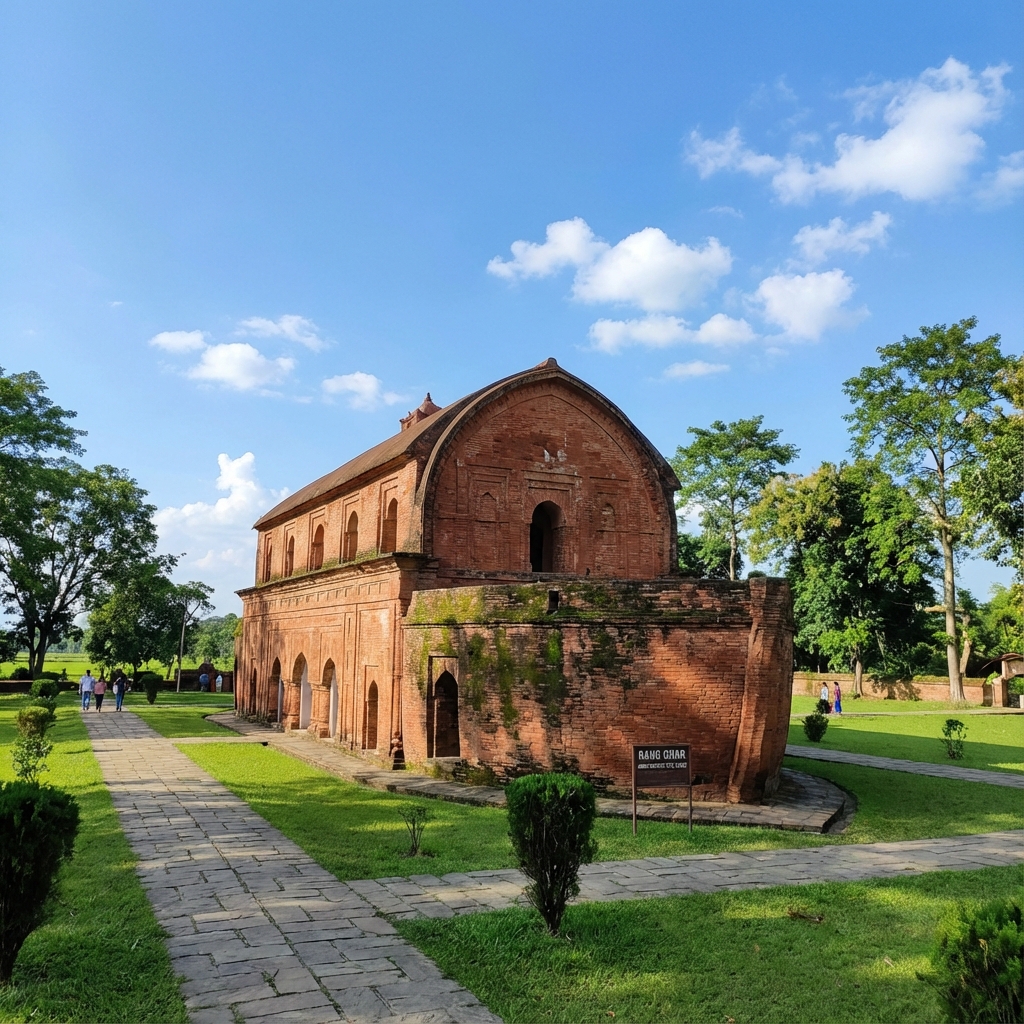
The medieval period of Assam witnessed the rise and fall of several powerful kingdoms, most notably the Ahom Kingdom, which would become the defining force of Assamese civilization. The Ahom dynasty, founded in 1228 CE by Sukapha, ruled Assam for nearly 600 years.
The Ahom Dynasty: Architects of Assamese Identity
The Ahoms were a Tai people who migrated from Yunnan in present-day China and established a powerful kingdom in the Brahmaputra valley. Over centuries, they integrated with local populations, adopting local customs and languages while maintaining their own identity. This synthesis created a unique Assamese culture and civilization.
Administration and Culture Under Ahom Rule
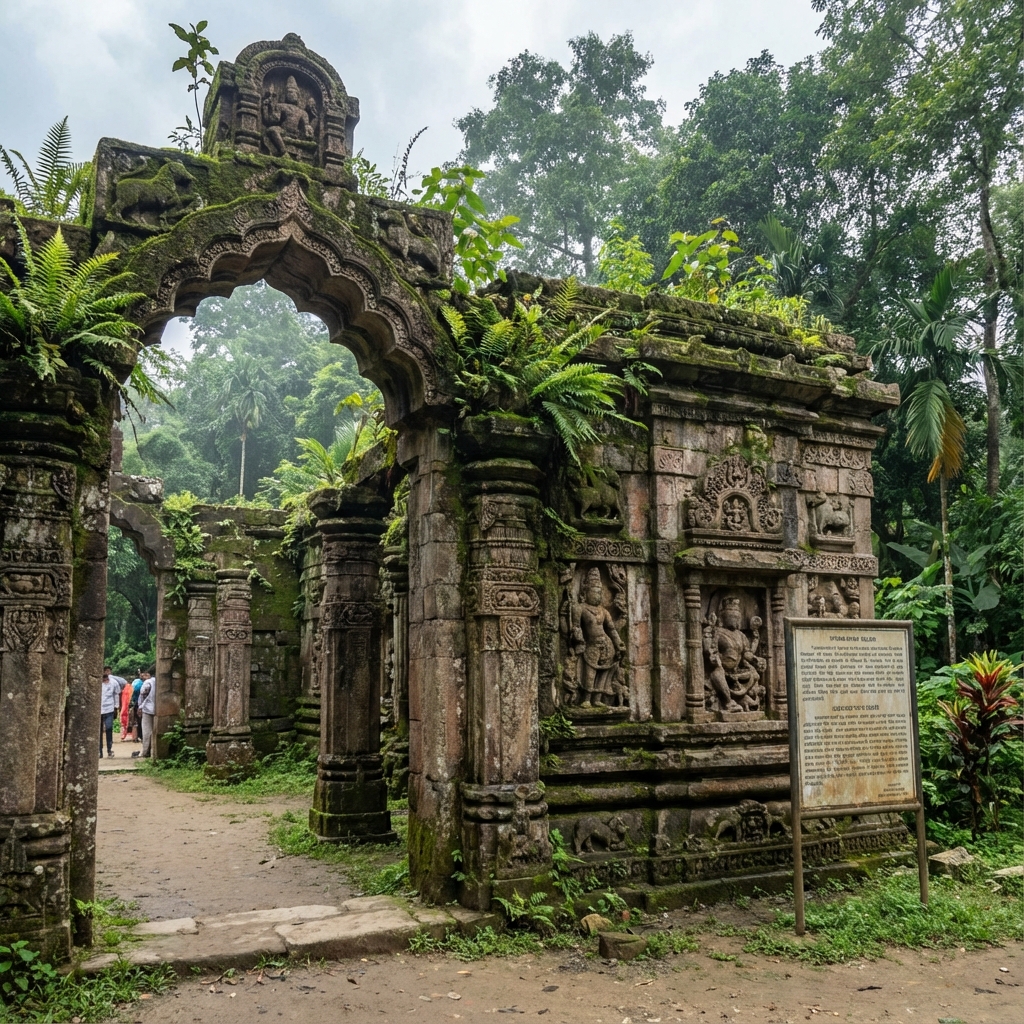
The Ahoms developed an sophisticated administrative system, dividing their kingdom into several circles (circles) and appointing capable administrators. They created a unique script (Tai Ahom) and maintained detailed chronicles (Buranjis) documenting their rule. These chronicles provide invaluable insights into medieval Assam.
The Mughal Invasions and Resistance
While the Mughal Empire dominated much of India, Assam maintained its independence. The Mughals launched several military campaigns against Assam, but the Ahoms successfully resisted, sometimes through direct conflict and sometimes through diplomacy. This resistance was a defining characteristic of Assamese history.
The Battle of Saraighat (1671)
One of the most celebrated victories in Assamese history is the Battle of Saraighat, where the Assamese forces under Raja Chakradhvaj Singh defeated the Mughal army led by Ram Singh. This naval battle on the Brahmaputra River became legendary in Assamese folklore and symbolized Assam's ability to maintain sovereignty against the mightiest empires.
The Colonial Period: Assam Under British Rule
The British East India Company arrived in Assam in the late 18th century, and by 1826, after the First Burmese War, Assam came under British control. The British established their administrative capital at Shillong and transformed Assam's economy and society.
Tea Plantations and Economic Transformation
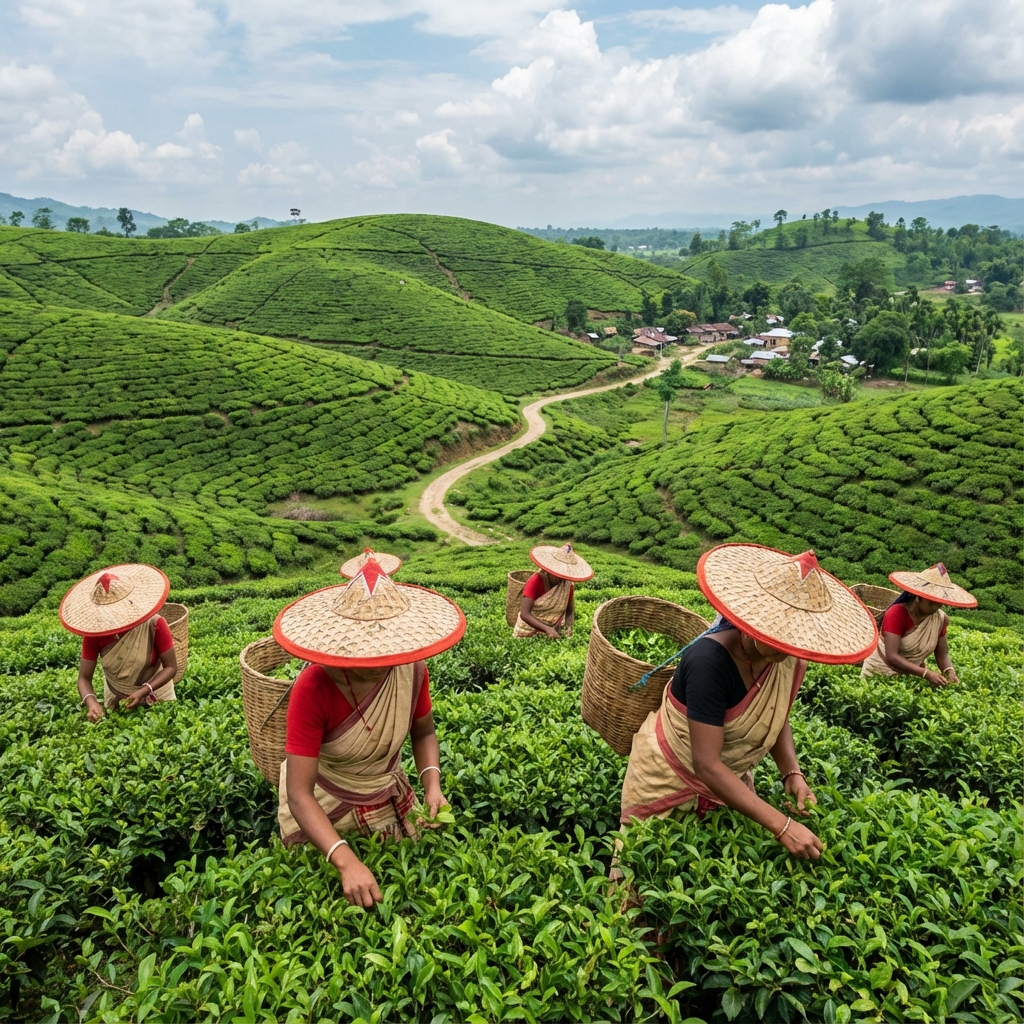
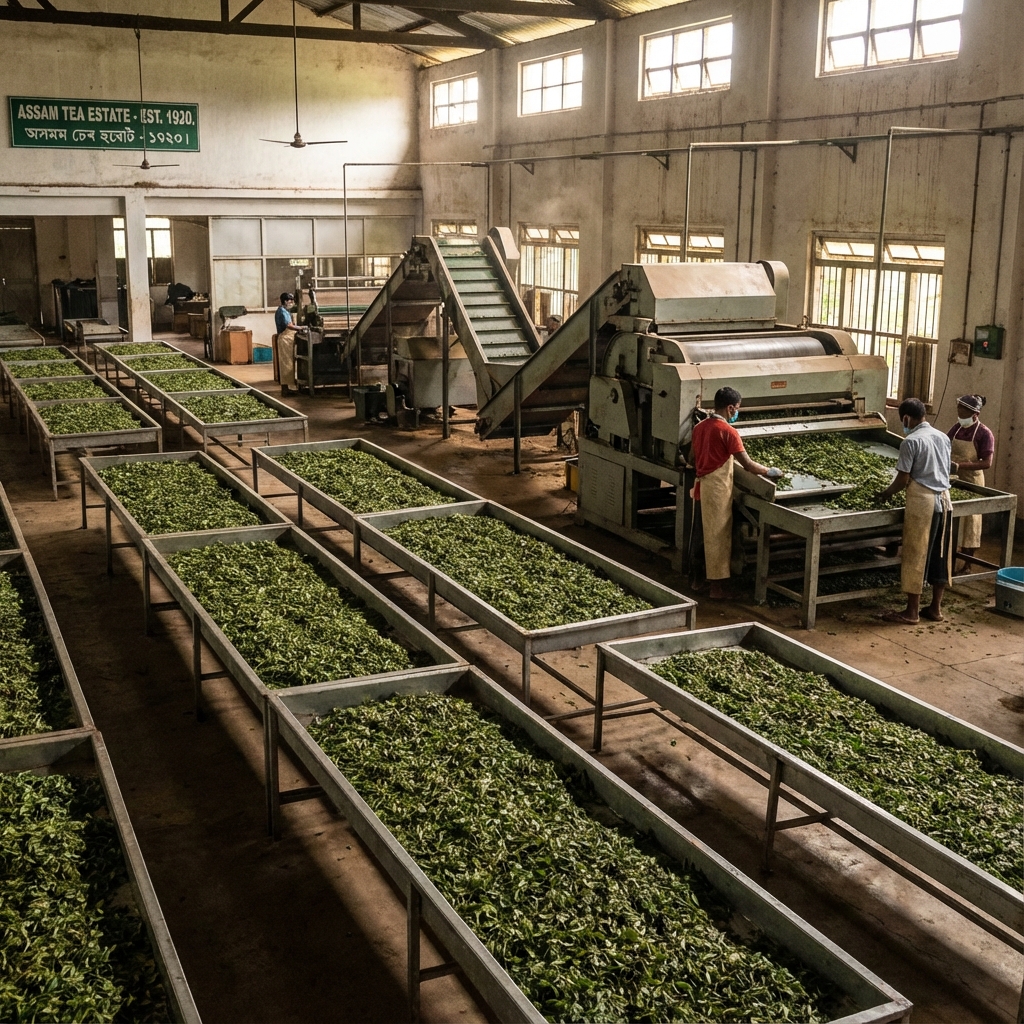
The British discovered that Assam's climate and soil were ideal for tea cultivation. They established vast tea plantations, transforming Assam into a major center of global tea production. This development brought wealth but also brought exploitation of local labor and environmental changes to the landscape.
Education and Assamese Renaissance
While colonial rule brought exploitation, it also brought new educational opportunities. Assamese intellectuals and reformers engaged with modern ideas, leading to an Assamese Renaissance. Leaders like Rammohan Roy's influence spread through Bengal to Assam, promoting social reform and cultural awakening.
The Independence Movement
Assam played a crucial role in India's independence struggle. Notable freedom fighters from Assam, such as Keshab Chandra Gogoi and Surya Kumar Sinha, contributed significantly to the movement. The Quit India Movement had a powerful impact in Assam, with widespread protests and civil disobedience.
Assam's Contribution to Indian Nationalism
Beyond armed resistance, Assam contributed cultural and intellectual movements to Indian nationalism. Writers, poets, and social reformers from Assam played important roles in shaping India's modern identity and values.
Modern Assam: Post-Independence Development
After independence in 1947, Assam faced several challenges including partition (with East Bengal going to Pakistan), integration of princely states, and ensuring development. The state has since developed into an important center of education, industry, and culture in Northeast India.
Education and Intellectual Capital
Assam has developed world-class educational institutions, including Guwahati University, Dibrugarh University, and various colleges producing leaders in various fields. The state remains a center of literary and cultural activity, with Assamese literature gaining recognition across India and abroad.
Challenges and Progress
Like all regions, modern Assam faces challenges including environmental conservation, economic development, and social cohesion. However, the state has made significant progress in recent decades, developing its infrastructure, economy, and institutions while maintaining its unique cultural identity.
Assam's Cultural Heritage: Preservation and Pride
Throughout its history, Assam has maintained a distinct cultural identity despite various external pressures. This identity is preserved in its language, literature, festivals, crafts, and values. Organizations and individuals work to document and preserve Assamese heritage for future generations.
Living Heritage
- Language: Assamese (Oxomiya) - a rich literary language with ancient roots
- Literature: From Satras (literary schools) to modern authors of international acclaim
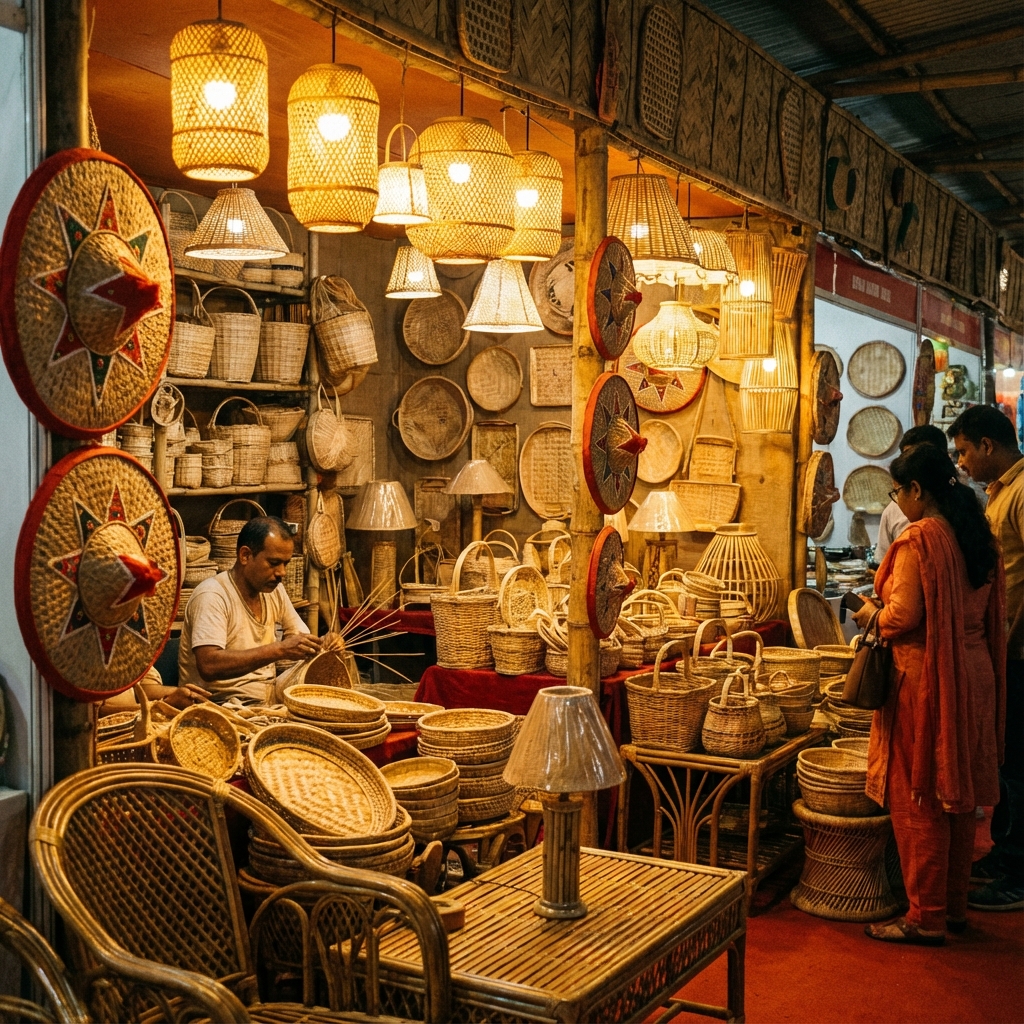
- Arts and Crafts: Handloom textiles, pottery, and various traditional arts
- Festivals: Bihu and other celebrations that bind communities together
- Cuisine: Distinct food culture reflecting local ingredients and history
Conclusion: A Continuous Journey
The history of Assam is not a finished narrative but a continuous journey. Each era added new layers to its identity while preserving essential elements of its heritage. From the ancient kingdoms to the modern nation-state, Assam stands as a testament to human resilience, cultural richness, and the enduring power of civilization to adapt and survive.
Understanding Assam's history helps us appreciate the region not as a peripheral part of India, but as a civilization with its own distinct contribution to human culture, knowledge, and progress. As Assam moves forward, this historical consciousness continues to guide its people toward a future that respects the past while embracing progress.
"In remembering where we come from, we find wisdom for where we are going. Assam's history is not nostalgia; it is a foundation for a vibrant future."